
At Pro-Gene Diagnostics and Research Laboratory, we are committed to advancing medical knowledge through cutting-edge research. Our latest study, published in the Journal of Pakistan Medical Association, pub med indexed sheds new light on the intricate relationship between plasma fibrinogen levels and microvascular complications in Type 2 Diabetes Mellitus (T2DM).
The Growing Burden of Type 2 Diabetes Mellitus
Type 2 Diabetes Mellitus (T2DM) affects a staggering 537 million people worldwide, making it one of the most prevalent chronic conditions globally. Pakistan ranks third in terms of diabetes prevalence, following China and India. T2DM is characterized by persistent hyperglycemia resulting from insulin resistance, leading to a host of microvascular complications (MVCs) such as diabetic retinopathy, nephropathy, and neuropathy.
Unveiling the Role of Plasma Fibrinogen
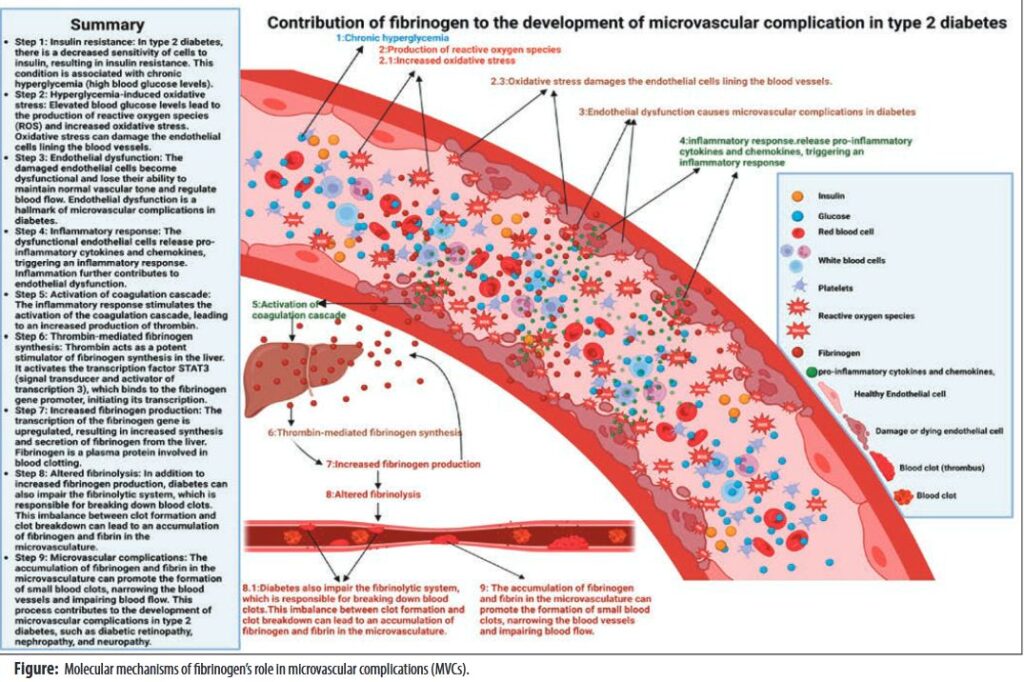
Our study focused on the correlation between plasma fibrinogen levels and the severity of MVCs in T2DM patients. Fibrinogen, a key protein in the coagulation cascade, has been implicated in endothelial dysfunction and hypercoagulability, critical factors in the pathogenesis of diabetic MVCs. Elevated fibrinogen levels are frequently observed in diabetic patients with poor glycemic control and have been linked to various complications.
Key Findings
- Diabetic Retinopathy:
- Diabetic retinopathy, the leading cause of adult blindness, involves damage to the retinal blood vessels. Our research found a significant association between elevated fibrinogen levels and the severity of retinopathy. Symptoms such as floaters, impaired color vision, night vision difficulties, and vision loss were prevalent among patients with higher fibrinogen levels.
- Diabetic Nephropathy:
- Nephropathy, a major contributor to kidney failure globally, is triggered by damage to the kidney’s small blood vessels. Our study revealed that increased fibrinogen levels were significantly correlated with the severity of nephropathy. Elevated fibrinogen was associated with markers like albuminuria, creatinine, and urea, indicating its role in glomerular injury and endothelial dysfunction.
- Diabetic Neuropathy:
- Neuropathy, characterized by pain, numbness, and loss of sensation, often results from peripheral nerve injury. We observed that higher fibrinogen levels were linked to the severity of neuropathy. Symptoms such as numbness, muscle weakness, digestive issues, and sexual dysfunction were more pronounced in patients with elevated fibrinogen.
Molecular Mechanisms and Future Directions
While the precise molecular mechanisms through which fibrinogen influences MVCs remain unclear, our study highlights its significant impact. The findings underscore the importance of monitoring and managing fibrinogen levels to mitigate diabetes-associated vascular pathologies.
Conclusion
The research conducted by Pro-Gene Diagnostics and Research Laboratory provides crucial insights into the role of plasma fibrinogen in the progression of MVCs in T2DM patients. By understanding these relationships, we can better target treatments and improve patient outcomes. Our commitment to research excellence continues to drive advancements in diabetes care and management.
For more detailed information, refer to our published study in the Journal of Pakistan Medical Association DOI: https://doi.org/10.47391/JPMA.10403.
PUBMED Link: https://pubmed.ncbi.nlm.nih.gov/39160710/
About Pro-Gene Diagnostics and Research Laboratory
Pro-Gene Diagnostics and Research Laboratory is dedicated to pioneering research and innovative diagnostic solutions. Our mission is to enhance healthcare outcomes through scientific excellence and technological advancements. Located in Mardan, Pakistan, we collaborate with leading medical institutions to push the boundaries of medical research and diagnostics.